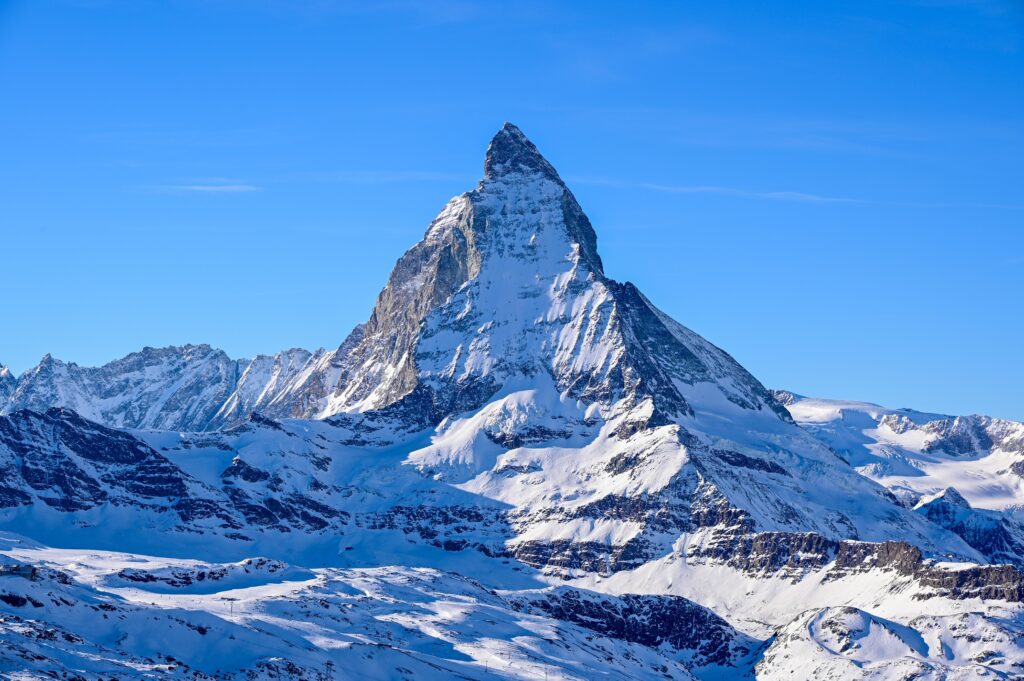
Switzerland is compact, spectacular, and exceptionally easy to navigate. It is famous for mountains, but the full experience also includes lakefront cities, efficient trains, tidy old towns, vineyards, cable cars, chocolate shops, and hiking routes that begin almost exactly where the timetable says they will. It is expensive, but it delivers a level of scenic access that few countries can match.
Where to start
Zurich is the most practical gateway, with strong rail links across the country. Lucerne is a classic first stop for lake and mountain scenery. Interlaken, Grindelwald, Lauterbrunnen, Wengen, and Murren open the Bernese Oberland, while Zermatt brings the Matterhorn into view. Geneva, Lausanne, Montreux, Bern, Basel, and Lugano each add a different cultural and landscape angle.
What Switzerland does best
Switzerland is at its best when the journey is part of the attraction. Scenic trains, lake boats, cog railways, cable cars, and panoramic routes turn transfers into highlights. In summer, hiking is the main event; in winter, ski resorts and snowy villages take over. The cities are polished and manageable, but the mountains are what make most first trips unforgettable.
Planning notes
Costs are high, so passes, supermarket lunches, apartments, and careful route planning can make a real difference. Weather matters in the Alps; build in flexibility rather than scheduling every viewpoint for a single fixed hour. Five days can cover one city and one mountain region, while ten days allows a beautiful rail route through Lucerne, the Bernese Oberland, Zermatt, and Lake Geneva.